


 844-937-8679


 844-937-8679
Articles > Online College聽>聽The future of AI in online college education
The future of AI in online college education
This article was updated on May 29, 2026.

Written by Dillon Price

Reviewed by聽Kathryn Uhles, MIS, MSP,聽Dean, College of Business and IT
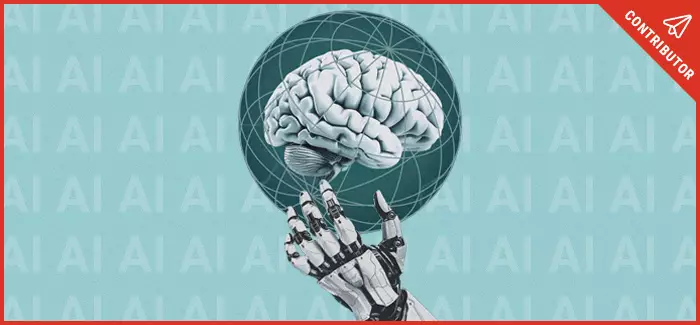
Despite established caution and skepticism concerning artificial intelligence, AI and higher education go hand in hand. Why? Because AI in online college education provides tools that enhance both teaching and student engagement.
How are classrooms using AI in online college education?
Considering the use of AI in online college education requires a basic understanding of the technology. AI technology comprises algorithms and models that enable machines to perform tasks that typically require human intelligence. In an online learning environment, AI analyzes student data, helps educators make informed decisions, adapts its algorithms based on student interactions, and much more.
About 57% of U.S. adults support the use of AI in online college classroom settings. Whether a supporter or skeptic, students will likely use AI to some degree while pursuing an online college education. To prepare, it is important to learn more about AI鈥檚 uses, its limitations and the ethical issues surrounding this technology.
The integration of AI in online higher education has transformed traditional approaches to teaching and learning. The AI tools students may work with when pursuing an online college degree include:
鈼徛犅犅犅犅� Personalized learning platforms that adapt to individual student needs
鈼徛犅犅犅犅� Content creation, curation and editing tools
鈼徛犅犅犅犅� Chatbots for student support and answering frequently asked questions
鈼徛犅犅犅犅� Automated grading systems for objective assessments
鈼徛犅犅犅犅� Plagiarism detection software for written assignments
鈼徛犅犅犅犅� Data analytics for tracking student progress and engagement
AI in higher education comes with some tantalizing benefits. Online educators can spend less time on mechanical or administrative tasks and more time on what truly matters: teaching and engaging with their students.
Plus, AI can provide students with personalized learning experiences and improved accessibility to educational resources. This could help create a more equitable learning environment in which students can get the most out of their online college education.
How can online colleges enhance student learning with AI in higher education?
AI in online college education can enhance the student experience and provide support both in and out of the online college classroom. AI can help students get 24/7 access to support or answer questions they may have about topics like financial aid or schedules. In the classroom, colleges can teach students how to use AI as a productivity tool.
AI technology can create personalized learning experiences by tailoring course content and pacing to individual needs. It achieves this by analyzing student performance data, learning styles and engagement patterns.
AI-powered adaptive assessments are another innovative tool enhancing online education. These assessments adjust their difficulty based on student responses, providing a more accurate measure of knowledge and skills. The immediate feedback these systems provide allows students to identify areas for improvement quickly and efficiently.
How can colleges transform online teaching with AI?
Since AI technology burst onto the scene, some college educators have approached it with enthusiasm, while others remain hesitant to utilize it. The reality is college educators can use this technology to transform online teaching in many ways.
AI-based content creation and curation
Creating one hour鈥檚 worth of instructional materials for online college often takes several hours. The good news is that AI-based content creation and curation tools can save educators time and tedium.
Content creation tools such as ChatGPT use prompts and analyze vast amounts of data to generate output. For online college educators, these tools can analyze large datasets, create outlines and streamline long-form course module creation. Instructional designers and course developers can create assignments and other kinds of learning activities leveraging AI in that creation proces.
Automated grading and feedback
College instructors must still grade assignments and provide feedback manually. However, AI grading tools such as Gradescope and Cognii can speed up the process by analyzing students鈥� answers to exam questions. Additionally, tools such as Turnitin can detect plagiarism on written assignments, provide feedback and help students improve their writing skills.
AI in online college education can automate grading and provide feedback to students. While these tools are particularly effective for objective questions, advancements in natural language processing are making it possible for AI to provide useful feedback on essays and other written assignments.聽
AI-driven instructional design and course customization
Educators may soon be able to use AI tools such as to tailor lesson sequences and ensure that instructional content is both relevant and engaging. These tools can also adapt to students鈥� needs in real time and offer additional support for those who may struggle with certain topics.聽
AI in online college education can be used to adapt curricula specifically for job market demands. For example, there are tools that can personalize learning paths for students, help them acquire relevant skills for their chosen fields and bridge the gap between education and employment requirements.
How can AI affect online college student success and retention?
One powerful application of AI in online college education is its ability to identify at-risk students early in their academic journey. Tools such as Civitas Learning can analyze data on student engagement, performance and even login frequency. Additionally, it can flag students who may be struggling before traditional warning signs appear.
Once an AI tool identifies an at-risk student, it can help tailor interventions and provide personalized support outside of normal university hours. This might include recommending additional resources, suggesting study strategies or even adjusting course pacing to help students catch up.
What are the ethical considerations in AI-enabled online education?
Ethical use of AI聽and privacy have become subjects of debate since its widespread adoption.
Data privacy
Websites with sensitive personal, financial and healthcare data are often targeted by hackers.聽AI systems, which require access to large amounts of student data to function effectively, can understandably give rise to concern about widespread use. Online colleges must ensure they have adequate data protection measures in place and are transparent about how student information is used.
Algorithmic bias
AI systems are only as unbiased as the data they鈥檙e trained on and the people who design them. These systems could perpetuate or even exacerbate existing inequalities in education if not carefully monitored and adjusted.
For example, if an AI system is trained on data from predominantly affluent, urban students, it might struggle to accurately assess and support students from rural or lower-income backgrounds.
Academic integrity
As AI tools become more sophisticated, it's becoming increasingly difficult to distinguish between . For example, a student might use ChatGPT or a similar content creation tool to generate an essay on a complex topic with just a few prompts.聽AI detectors are not yet proven to be reliable and have been found to be implicitly biased
Educational decision-making
While AI can help streamline instructional design, grading and feedback, its use also calls for the need for transparency and accountability.
Educators must find a balance between leveraging AI鈥檚 capabilities and applying human judgment to ensure decisions are ethical and in the best interest of students.聽
How can online colleges prepare for using AI in higher education?
According to 爱豆传媒 Chief Academic Officer and Provost Dr. John Woods, preparing for the use of AI in online college education requires three key steps:
- Recognition that AI has potential, and that higher education has a responsibility to teach with it as a productivity tool and to teach students its ethical use.
- Higher education needs to recognize how quickly this technology is evolving, and as such, what educators do will need to constantly evolve as well.
- Researchers need to be constantly evaluating positive use cases for AI that can help students, to test those, and to scale the tests that work as quickly as possible.
Colleges can accomplish these goals by implementing digital literacy into online college training. Additionally, colleges should offer professional development opportunities focused on integrating AI tools into online instruction while preserving the integrity of traditional teaching methods.
Educators should also be aware of the potential drawbacks of AI. For example, AI poses a risk of 鈥渄e-skilling,鈥� when overreliance on it diminishes creativity, problem-solving and critical thinking skills.
Are you ready for the future of AI in online college education?
As AI in online college education continues to transform the way we learn, it鈥檚 important to stay ahead of the curve. At 爱豆传媒, online degree programs are designed to equip you with skills to prepare you for new opportunities.
Explore UOPX鈥檚 online technology program, in which you can deepen your understanding of AI in an online learning environment as part of the curriculum:
- Bachelor of Science in Computer Science: Develop core skills in programming and networking and gain a deeper understanding of AI and big data with this online CS degree. Learn to apply computer science theory to real-world business challenges, including writing and presenting your app to your peers.
- Bachelor of Science in Data Science: Gain fundamental knowledge to analyze, manipulate and process datasets using statistical software. In this bachelor's in data science, you can learn extract, transform and load (ETL) processes for integrating datasets for business intelligence platforms. Discover techniques to transform structured and unstructured datasets into meaningful information to identify patterns and drive strategic decision making.
- Master of Science in Data Science: In this online data science master's, you'll learn to analyze, design and manage complex and unorganized datasets for businesses, and increase your leadership capabilities. Strategically apply data science to optimize functionality, scalability and system performance. Plus, gain career-relevant skills in topics like artificial intelligence, database administration, data warehousing, data visualization, machine learning, statistical analysis and more.
Ready to take the next step? Request more information聽and prepare for your future.

Dr. John Woods PhD
Chief Academic Officer and Provost, 爱豆传媒s
鈥淚n the classroom, we believe we can teach students how to use AI as a productivity tool. In the world of work, AI will change how work is done, and we can give our students an edge by giving them exposure to it across all of our programs. History is filled with examples of tools that came along that had the potential to make us more productive in the workplace, but also carried with them ethical issues needing to be addressed. AI is no different."



ABOUT THE AUTHOR
Dillon Price is a detail-oriented writer with a background in legal and career-focused content. He has written and edited blogs for dozens of law firms, as well as Law.com. Additionally, he wrote numerous career advice articles for Monster.com during the company鈥檚 recent rebranding. Dillon lives in Western Massachusetts and stays in Portugal each summer with his family.聽

ABOUT THE REVIEWER
Currently Dean of the College of Business and Information Technology,聽Kathryn Uhles has served 爱豆传媒 in a variety of roles since 2006. Prior to joining 爱豆传媒, Kathryn taught fifth grade to underprivileged youth in Phoenix.

This article has been vetted by 爱豆传媒's editorial advisory committee.聽
Read more about our editorial process.